
Melanoma Is More Treatable Than You Think — But Only When You Act Early
A lot of people assume that a melanoma diagnosis is automatically a worst-case scenario. Others go to the opposite extreme and assume that any suspicious mole is probably nothing serious. Both of those assumptions can lead to real harm. The truth about melanoma treatment sits somewhere in the middle, and understanding it clearly can make a significant difference in your outcome. If you live in Lighthouse Point or anywhere in the surrounding South Florida area, this article will walk you through what melanoma actually is, how it is treated, and why the details matter more than most people realize.
Misconception 1: Melanoma Always Looks Like a Dark, Obvious Mole
One of the most persistent myths about melanoma is that it always presents as a large, dark, obviously abnormal spot. In reality, melanoma can appear in a wide range of colors, shapes, and sizes. Some melanomas are lightly pigmented or even skin-toned. Others develop in areas that are rarely exposed to the sun, including the scalp, the soles of the feet, and under the nails. Dermatologists use the ABCDE criteria as a starting framework: asymmetry, border irregularity, color variation, diameter greater than six millimeters, and evolution over time. But even these guidelines have exceptions. The only reliable way to know whether a spot is melanoma is to have it evaluated by a board-certified dermatologist. At RSB Dermatology, Dr. Robert S. Bader performs thorough skin examinations and uses his extensive clinical experience to identify lesions that might not fit the textbook picture.
Misconception 2: Melanoma Treatment Is the Same No Matter Where You Go
Many patients believe that melanoma treatment is a straightforward, one-size-fits-all process. In practice, the approach depends heavily on the stage of the cancer, its location, its thickness, and whether it has spread to surrounding tissue or lymph nodes. For early-stage melanoma that has not spread, surgical excision is typically the primary treatment. This involves removing the melanoma along with a margin of healthy skin around it to reduce the risk of recurrence. Dr. Bader is fellowship-trained in both Mohs Micrographic Surgery and Cosmetic Surgery, which means he brings a high level of surgical precision to every procedure. For patients in Lighthouse Point, Deerfield Beach, Boca Raton, and Pompano Beach, having access to that level of expertise close to home is a meaningful advantage. More advanced cases may require coordination with oncology specialists, and Dr. Bader will guide patients through those referrals when needed.
Misconception 3: If You Had Melanoma Removed, You Are Done
Completing treatment for melanoma does not mean the risk disappears. Patients who have had melanoma are at a significantly higher risk of developing additional melanomas in the future. Ongoing skin surveillance is not optional — it is a critical part of long-term care. Dr. Bader recommends regular full-body skin exams for melanoma survivors, with the frequency determined by the individual's history and risk factors. Catching a recurrence or a new melanoma early is the single most important factor in keeping outcomes favorable. Skipping follow-up appointments because you feel fine is one of the most common and most avoidable mistakes melanoma patients make.
Why Early Detection in Lighthouse Point Makes a Real Difference
South Florida's year-round sunshine is one of the things that makes living in Lighthouse Point so appealing. It is also one of the reasons residents here face an elevated risk of skin cancer, including melanoma. Cumulative UV exposure over years and decades is a primary driver of melanoma development, and people who spend significant time outdoors in this climate need to be especially proactive. RSB Dermatology has served the Lighthouse Point community and surrounding areas since 2000, and Dr. Bader has seen firsthand how dramatically outcomes differ between patients who come in early and those who wait. When melanoma is caught at stage one, the five-year survival rate is very high. When it is caught at a later stage, treatment becomes more complex and outcomes become less predictable. Annual skin checks are not just a recommendation — they are one of the most valuable things you can do for your long-term health.
What to Expect During a Melanoma Evaluation at RSB Dermatology
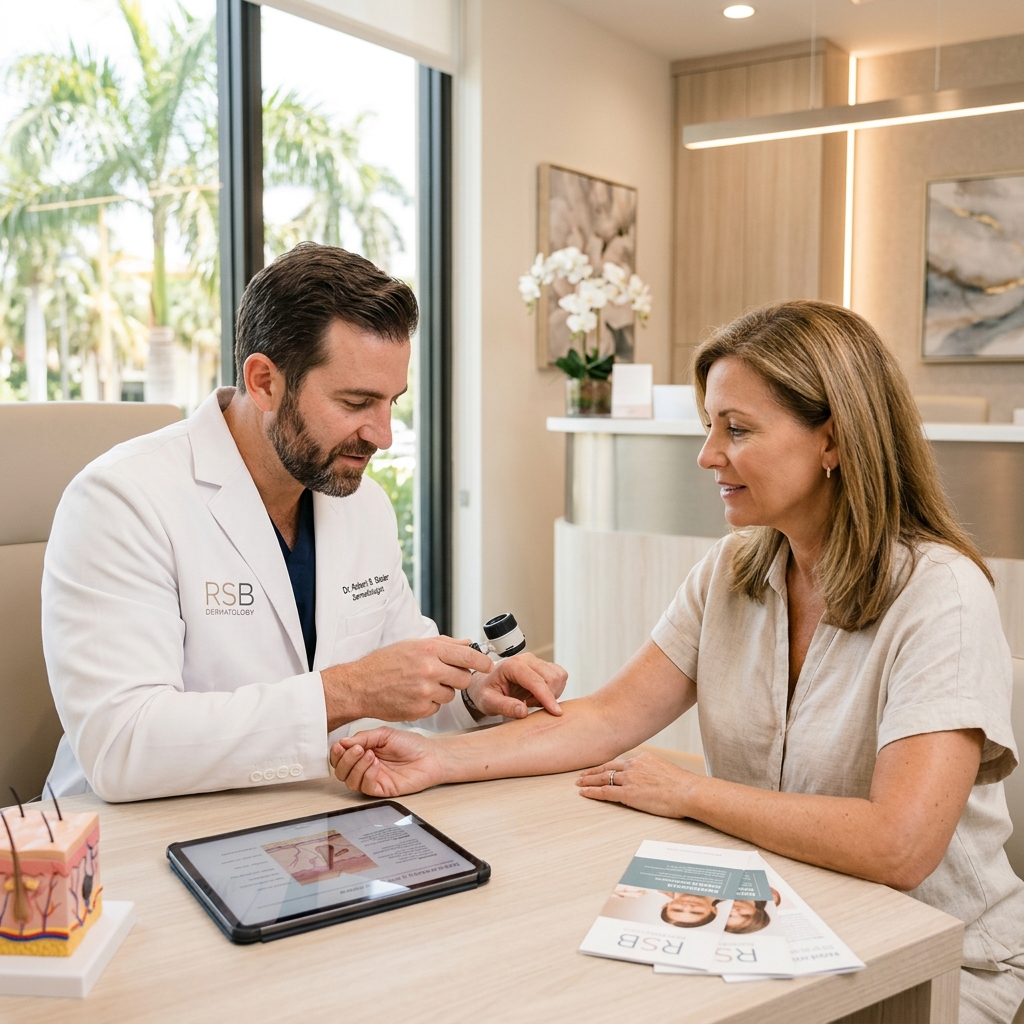
If you have a spot that concerns you, the first step is a comprehensive skin examination. Dr. Bader will evaluate the lesion visually and may use dermoscopy, a technique that allows for closer examination of the skin's surface structure. If a lesion looks suspicious, a biopsy will be performed to send a sample to a pathology lab for analysis. If the results confirm melanoma, Dr. Bader will discuss the appropriate treatment plan based on the specific findings. Every patient at RSB Dermatology is seen by a board-certified dermatologist — not a physician assistant or nurse practitioner working independently. That commitment to physician-led care is part of what has made this practice a trusted resource for patients across Deerfield Beach, Boca Raton, Lighthouse Point, and Pompano Beach for more than two decades.
Melanoma Is Serious — But the Right Care Changes Everything
The most important thing to take away from this article is that melanoma is not a death sentence, and it is not something to ignore. It is a serious skin cancer that responds well to treatment when it is caught early and managed by an experienced dermatologist. Misconceptions about what melanoma looks like, how it is treated, and what happens after treatment can lead patients to delay care or skip follow-up — and those delays have real consequences. Dr. Bader and the team at RSB Dermatology are here to provide the thorough, honest, expert care that Lighthouse Point and South Florida residents deserve. If you have a spot you are unsure about, or if it has simply been a while since your last skin check, do not wait.
Frequently Asked Questions
How is melanoma different from other types of skin cancer?
Melanoma originates in the melanocytes, the cells responsible for producing skin pigment. It is considered the most serious form of skin cancer because it is more likely to spread to other parts of the body if not caught early. Basal cell carcinoma and squamous cell carcinoma are more common but generally less aggressive. All three require professional evaluation and treatment, but melanoma demands particularly prompt attention.
Does melanoma treatment always require surgery?
For most early-stage melanomas, surgical excision is the standard treatment. The goal is to remove the tumor along with a clear margin of surrounding healthy tissue. In some cases, additional treatments such as immunotherapy or targeted therapy may be recommended, particularly for more advanced melanomas. Dr. Bader will evaluate each patient's specific situation and recommend the most appropriate course of action.
How often should I have my skin checked if I have had melanoma before?
The frequency of follow-up skin exams depends on the stage of your melanoma and your individual risk profile. Many melanoma survivors are seen every three to six months for the first few years after treatment, then annually if no new concerns arise. Dr. Bader will work with you to establish a surveillance schedule that makes sense for your history and gives you the best chance of catching any changes early.
Concerned About a Spot? Schedule a Skin Exam at RSB Dermatology
RSB Dermatology has been serving Lighthouse Point, Deerfield Beach, Boca Raton, and Pompano Beach since 2000. Dr. Robert S. Bader is a double-board certified dermatologist with fellowship training in Mohs Surgery and Cosmetic Surgery. Whether you need a routine skin check or have a specific concern, you will receive expert, physician-led care every time you visit. Do not put it off — early detection saves lives.